
Franklin County’s Three-Day Gap
No official Franklin County Sheriff’s Office page shows a rolling 72-hour release window. Put plainly, FCSO publishes no public release feed and no official inmate app. The agency also publishes no inmate-name roster, release archive, or released-person booking page. There is therefore no exact feed URL, public retention rule, photo column, or update cadence to describe. The Franklin County result is a negative public-access finding, not a claim that FCSO keeps no release data.
The sheriff’s Facility Operations page says its records staff prepare admission and release reports. A three-day inquiry can therefore target an existing report for a specific span. It should state the calendar dates and exact timestamps. This keeps the request tied to a record the office may already maintain and avoids asking staff to build a new release list.
The official FCSO page inventory documents the absence of a public recent-release destination.
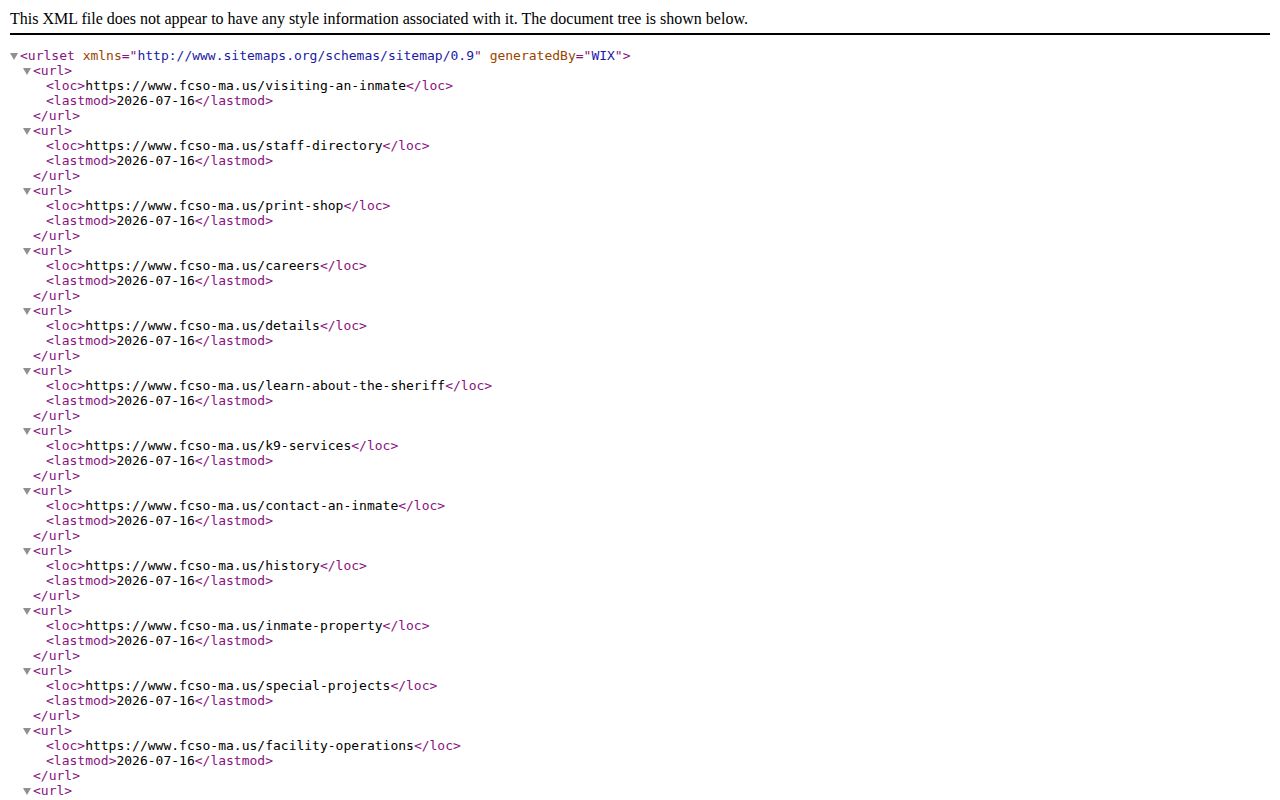
The site inventory supports switching from a web-feed search to a precise records request for the three-day period.
Check Franklin County Three-Day Releases
The Franklin County Jail and House of Correction at Elm Street is the starting point only when FCSO was the last known custodian. A state-prison, federal, immigration, or regional-jail case belongs to a different records system. For a true Franklin County sheriff release inquiry, use this sequence:
- Choose a clear start time and end time covering the full three-day period. State the time zone when precision matters.
- Call FCSO at 413-774-4014 and ask if the named person remains at Elm Street. If not, ask whether the recorded outcome was community release or transfer.
- Email records@fcso-ma.us for the existing admission/release report covering the defined interval. Include identifying details for a named person or ask whether a nonexempt daily report already exists for the dates.
- Request the release date and time, category, releasing institution, docket, and receiving authority. Those fields prevent a transfer from being mislabeled as release.
- Compare the result with the criminal docket and follow any named receiving agency. The court can show the legal order, while the custody record shows when FCSO control ended.
The Franklin County Records Access Officer page gives the official request channels.
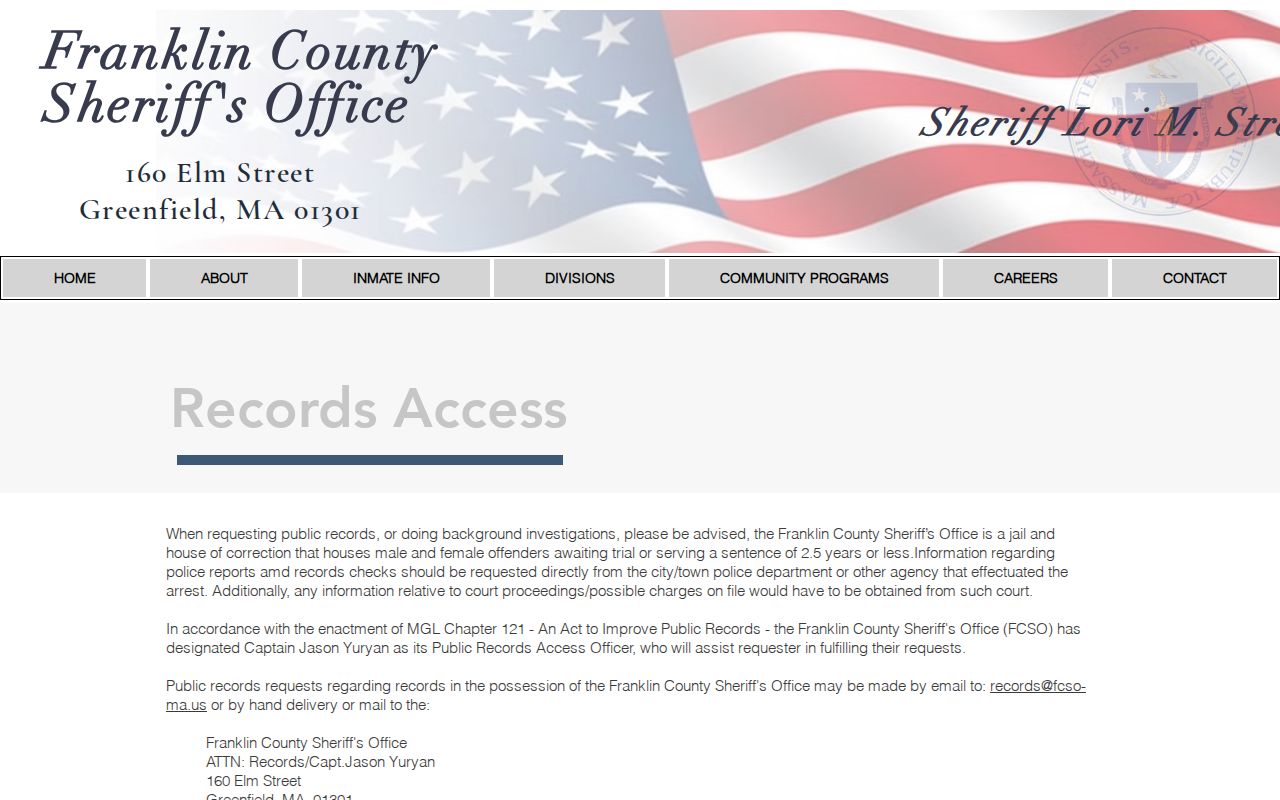
This date-bounded request path replaces the missing rolling list and lets the custodian identify any lawful redactions.
For a same-day question that does not need the longer span, the Franklin County 24-Hour Release List method uses a tighter interval. The three-day process is most useful when the event time is uncertain or a weekend sits inside the range.
Massachusetts public-record law generally requires a written response within ten business days. The office may produce records, identify an exemption, seek clarification, or provide a fee estimate. Electronic delivery is preferred when feasible. A request for three exact dates, existing report names, and only the fields needed is easier to assess than a broad demand for all jail data. If part of a record is exempt, ask for the segregable public portion and the legal basis for each withheld part.
Franklin County 72-Hour Record Fields
Because Franklin County has no public three-day feed, these are requested record fields rather than columns visible online. They reflect the admission/release record described by FCSO and Massachusetts release categories. The records officer may use different labels or redact protected details.
| Requested field | Why it matters across three days |
|---|---|
| Name and booking number | Separates the correct person and custody episode from similar names or repeat admissions. |
| Admission date and type | Provides the starting status and explains whether the person was pretrial or serving a sentence. |
| Actual release date and time | Places the end of sheriff custody within the requested window. |
| Release category | Identifies bail, recognizance, court release, time served, sentence expiration, parole, probation, or transfer. |
| Releasing facility | Separates Elm Street from an outside regional or state institution. |
| Court and docket | Connects the release event to the underlying order and later case history. |
| Receiving authority | Shows whether confinement continued under another agency. |
The public Q3 2025 Chapter 126 report shows that Franklin’s reporting environment tracks release date, admission type, earned time, sentence length, and jail credit. That report is quarterly and anonymous. It can explain field structure and broad trends, but it cannot identify who left during one 72-hour period.
Note: Ask for the booking photograph as a separate item because no public Franklin County release feed has a verified photo field.
Franklin Weekend Release Timing
A three-day interval is especially useful around a Friday, weekend, or legal holiday. Massachusetts General Laws chapter 127, section 150 says that when a sentence term expires on Saturday, Sunday, or a legal holiday, discharge occurs on the preceding day. As a result, an event expected on a weekend may appear in Friday’s admission/release report.
The rule is narrow. It applies to the expiration of a term. It does not move every bail release, court release, transfer, or parole event to Friday. Those events depend on their own legal order, hold checks, and processing facts. A request should cover the actual surrounding dates and then read the disposition rather than assume the statute controlled the outcome.
The Massachusetts weekend and holiday discharge law states the preceding-day rule.
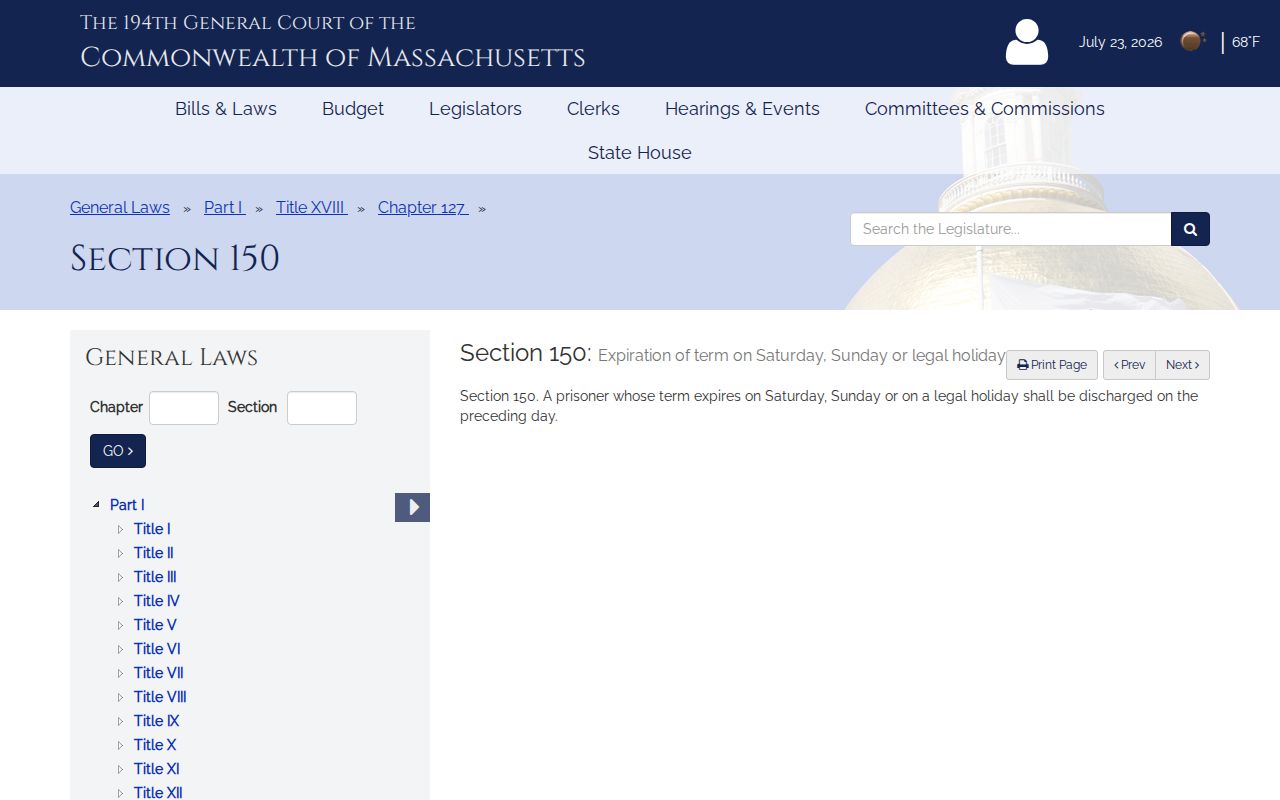
The official statute explains why a three-day Franklin County record request should often include Friday when the expected expiration falls on a weekend.
Franklin Intermittent Custody Events
A second Massachusetts rule can create repeated weekend custody events, but it must not be confused with final discharge. Under chapter 279, section 6A, a court may order a qualifying first-offense jail or house-of-correction term of no more than one year to be served on weekends or other intervals. The default weekend period runs from a Friday report time to Monday morning, or Tuesday when Monday is a holiday.
Each temporary exit during an intermittent sentence is not necessarily the end of the full sentence. The court order and FCSO record should be read together. If the admission/release report labels an intermittent event, confirm whether more custody intervals remain. The final discharge date is a different fact.
This distinction is why a three-day list request must include release type, not just name and date. The date alone cannot tell whether the person completed the sentence.
Franklin Release Dockets Across Courts
The three-day court check may cross Greenfield District Court, Orange District Court, and Franklin County Superior Court. Greenfield serves much of the county, Orange serves eastern communities, and Superior Court has countywide jurisdiction for its case types. The correct clerk matters when an online entry is unclear or a document is needed.
Massachusetts remote criminal docket searches can be docket-number based. Start with the official court-search routing page, then use the known docket or contact the likely clerk. Look for bail or recognizance, dismissal, plea, sentence, time served, probation, warrant, stay, or revocation events. A docket event establishes legal action, not always the exact time the person walked out.
The official Massachusetts court-search route directs users to case access and courthouse records.
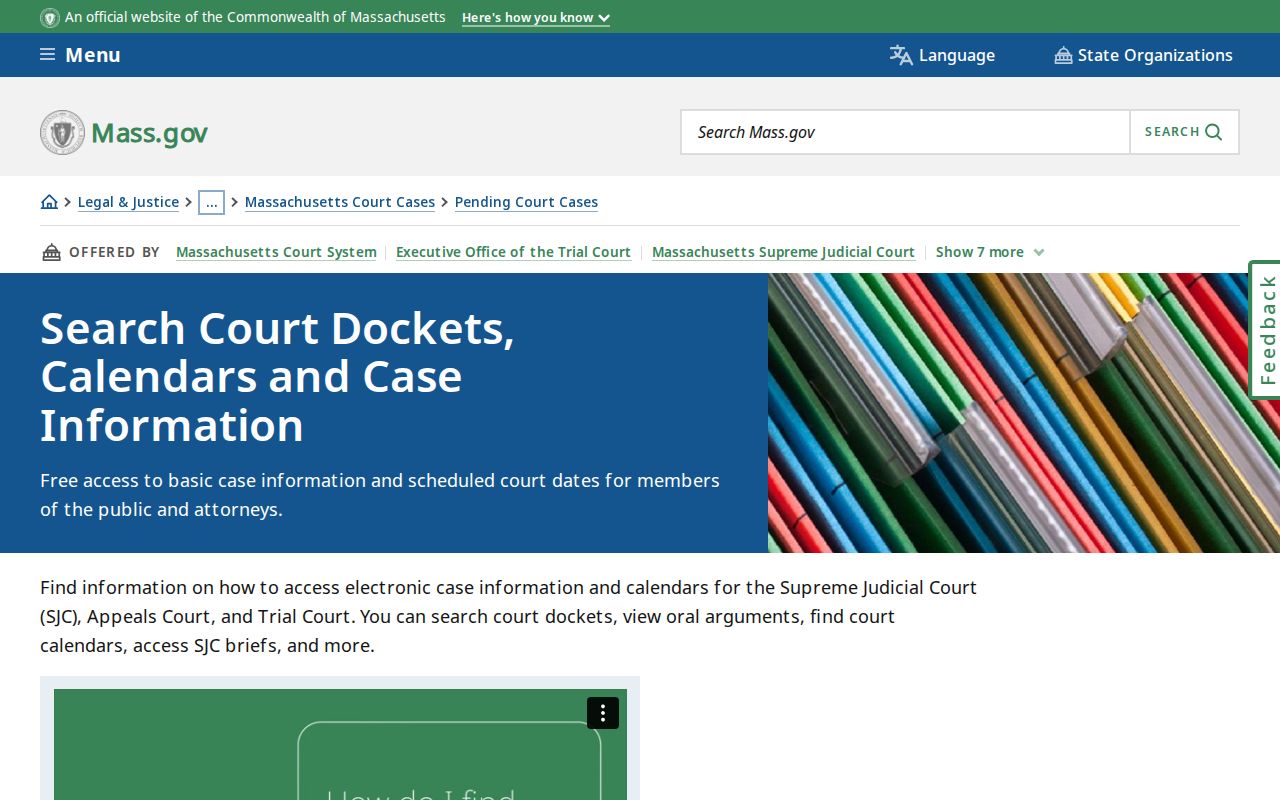
The court route supplies the legal context that a date-bounded FCSO release report alone may not fully explain.
Franklin Release Channels by Custody
A Franklin County sheriff record covers FCSO custody. It does not serve as a state-prison discharge record. Massachusetts directs state-prison searches to VINELink, and the Commonwealth says only MA DOC participates in Massachusetts VINE. A past MA DOC release may require a public-record request for the discharge certificate, sentence-computation record, and actual release transaction if the live result no longer appears.
The Western Massachusetts Regional Women’s Correctional Center is another separate path. For a Franklin case actually housed in Chicopee, use WCC or Hampden records and the Franklin court docket. WCC’s published bail windows apply there, not at Elm Street. Its hold checks can also delay community departure even after bail is posted.
Federal custody belongs in the BOP locator and federal records. ICE ODLS checks immigration custody and may retain some recent release information, but an absent result does not prove a community release. U.S. Marshals pretrial placement may require the federal court or USMS to identify the contract facility.
Prospective notice follows two different Massachusetts routes. VINELink can provide available alerts for participating MA DOC records. The confidential Victim Notification Registry has separate eligibility and registration rules for specified events. Parole verification belongs with the Massachusetts Parole Board, and probation is checked through the sentencing court and Massachusetts Probation Service. SORB is only a specialized public registry for qualifying classifications, never a general release list.
For one person whose custody path is unclear, the Franklin County released inmate search lays out the full agency-by-agency sequence. The 72-hour request remains a list-style or short-window tool, not a universal name archive.
Note: Social media office news is not a systematic Franklin County admission/release feed and should not replace the agency record.