
Franklin Release Dates Explained
A projected date is a maintained calculation, not a promise. The Massachusetts Department of Correction glossary uses “Release Date” for a calculated date based on the sentence terms without deductions that may later be earned. That date forms a basis for calculating the actual release date. Franklin County Sheriff records serve a different role: the local release transaction records when FCSO custody actually ended and how it ended.
Three events can carry different timestamps. A court order gives legal authority for bail, time served, a sentence, or another disposition. A correctional calculation applies the sentence structure, pretrial credit, and eligible deductions. The actual transaction records physical departure from that custodian. Someone may then go to the community, parole, probation, another jail, MA DOC, a warrant, or another authority. A transfer date is not a community release date.
Pretrial detention is different. A person awaiting trial has no sentence end date to compute. Bail may be set, changed, posted, or delayed by another mittimus, warrant, detainer, or condition. A mittimus is the court's written order committing a person to custody. The court docket explains the legal action, while the jail record shows whether and when physical custody ended.
Find Franklin Projected Release Dates
Begin with the last known custodian. The Franklin County Jail and House of Correction and MA DOC keep different records. Massachusetts' public state locator routes to VINELink, but the Commonwealth says only MA DOC participates. The sheriff does not publish an Elm Street projected-date field. A state result must also be read exactly as displayed because the official locator does not promise that every record shows a projected date.
- Confirm whether the person is awaiting trial, serving a Franklin house-of-correction sentence, or serving an MA DOC sentence.
- For Elm Street, contact FCSO and request the existing sentence-computation report plus the later admission and release transaction.
- For state prison, use the official MA DOC locator route, then preserve the exact label and retrieval date for any date shown.
- Check the sentencing docket for the imposed terms, pretrial confinement credit, amended orders, consecutive terms, and probation.
- Ask the correct records officer for the final release or discharge record when formal confirmation is needed.
The official Massachusetts prison locator page shows where a state-prison search begins and states the VINE participation limit.
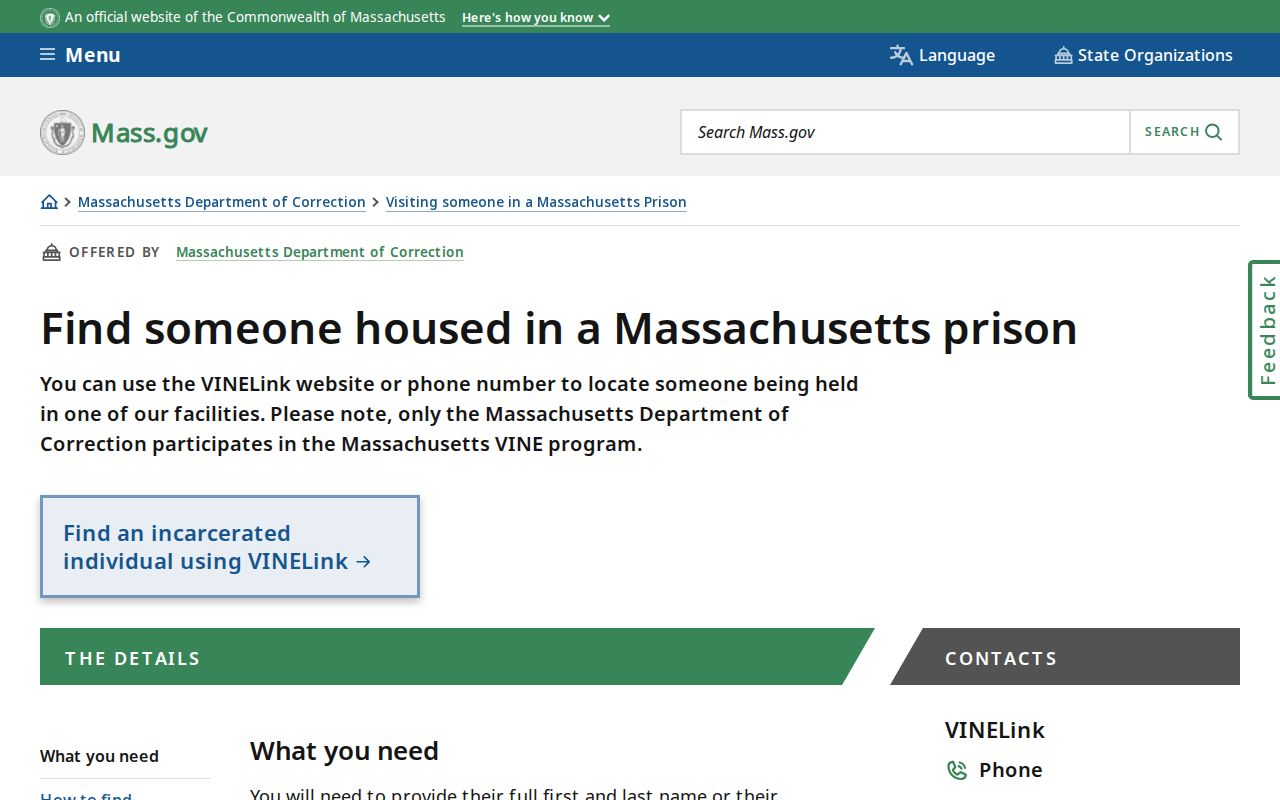
This state route does not cover a person held only at the Franklin County Jail and House of Correction. For one named county-jail release, use the Franklin County release record process instead.
MA DOC records requests can seek the sentence listing, computation report, Release Order, certificate of discharge or release, and transaction showing the actual date, release type, and destination. FCSO's Records Access Officer handles the equivalent county material. MA DOC expressly does not handle sheriff house-of-correction records.
The court source matters too. A Franklin case can be in Greenfield District Court, Orange District Court, or Franklin County Superior Court. The Greenfield District Court page provides the local clerk route, while the correct docket supplies the sentence and later court changes. Remote criminal searching often requires an exact docket number, so the clerk or courthouse terminal may be needed when that number is unknown.
Franklin Sentence Computation Records
The FCSO Facility Operations page says the records unit maintains committed-person files and court commitments, computes sentences and earned credit under M.G.L. c. 127, §129D, processes warrants and summonses, and prepares admission and release reports. This is the key Franklin County source. There is no public county projected-date screen to replace it.
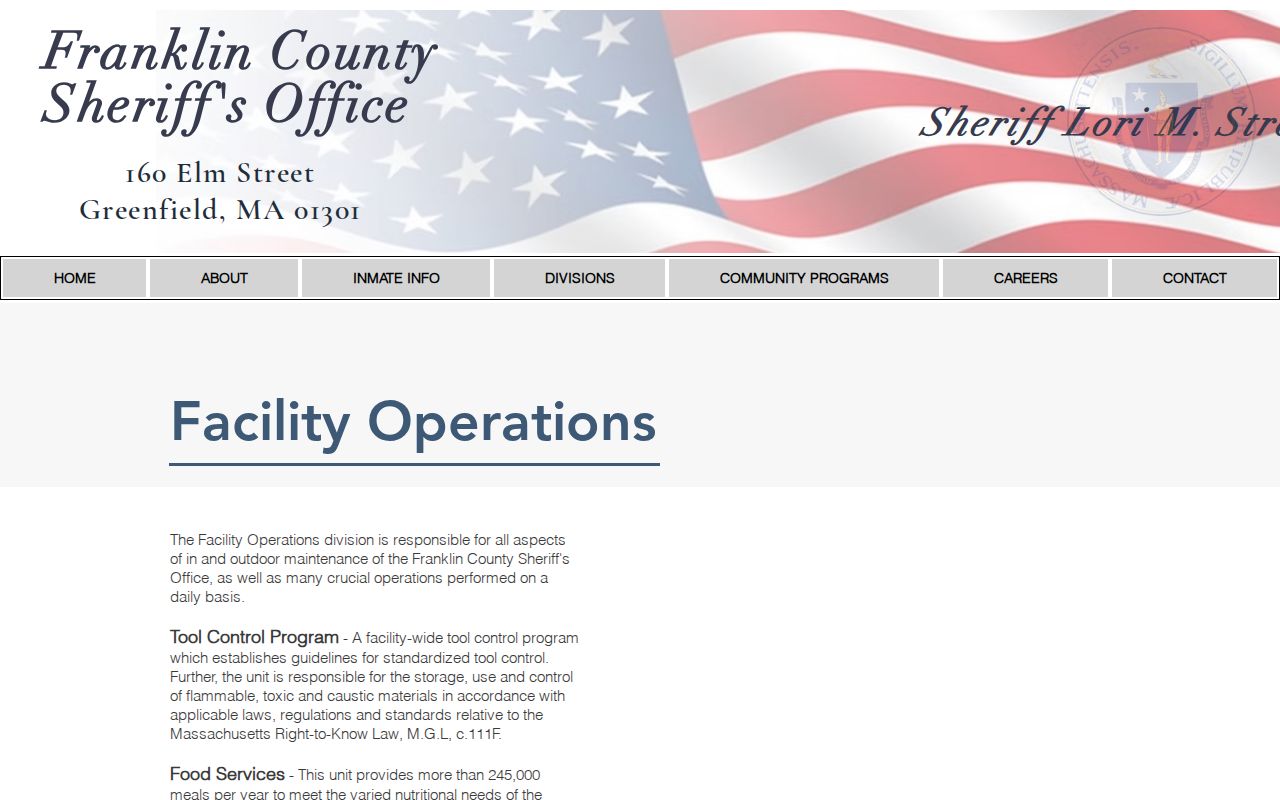
The screenshot documents the local unit that performs the calculation and keeps the later release report, making a narrow records request more reliable than a guessed date.
A useful request identifies the person, approximate commitment period, docket, and any known booking or commitment number. Ask for the sentence-computation sheet, court-credit entries, earned-credit entries, warrants or holds affecting release, and the actual release transaction when it exists. Request existing records rather than asking staff to create a custom forecast. Some personal, security, medical, CORI, sealed, or expunged material may be withheld or redacted.
FCSO requests go to records@fcso-ma.us or Franklin County Sheriff's Office, ATTN: Records/Capt. Jason Yuryan, 160 Elm Street, Greenfield, MA 01301. The office lists 413-774-4014 extension 2191. Under M.G.L. c. 66, §10, a written response is generally due within ten business days, though production, estimates, redaction, or a lawful denial may follow.
The FCSO Records Access page is the local submission source. Ask for electronic delivery and a narrow date range. A record officer need not create a new projection, but can identify whether an existing computation sheet or admission and release report is held. If an amount is estimated, narrowing the request to the sentence record and final transaction can reduce work while preserving the key proof.
Franklin Release Credit Rules
Massachusetts does not use a universal rule that every incarcerated person must serve 85 percent. Truth-in-sentencing reform eliminated former statutory good time for covered offenses committed after June 30, 1994, but current law provides case-specific earned deductions. Mandatory minimums and sentence terms can limit their effect. A historical report that one cohort served 85 percent or more does not create a statewide formula.
Under M.G.L. c. 127, §129D, the commissioner or county correctional authority may award credit for satisfactory participation and demonstrated competency in qualifying programs or activities. The credit is not automatic.
| Sentence | Program allowance | Monthly cap |
|---|---|---|
| State prison | Up to 7.5 days per qualifying program or activity | 15 days total per month |
| House of correction | Up to 5 days per qualifying program or activity | 10 days total per month |
| HOC completion award | Up to 10 additional days for an eligible six-month program | Subject to the statute and satisfactory participation |
The statute sets separate percentage caps on eligible reductions, including 35 percent limits in specified maximum-term and parole-minimum calculations. State completion credits follow their own rules. Pretrial confinement credit under M.G.L. c. 279, §33A and prison-camp credit under §129C address different facts. They cannot be merged into one shortcut.
Under 103 CMR 411.10, an MA DOC person can seek written reconsideration of a deduction or date-computation report within ten business days after receiving it. That process confirms the projection is a maintained administrative calculation. It does not make the same date a promised public VINELink field or prove that no warrant, court change, or release-day correction will intervene.
The captured Massachusetts earned-credit statute provides the controlling allowances and limits.
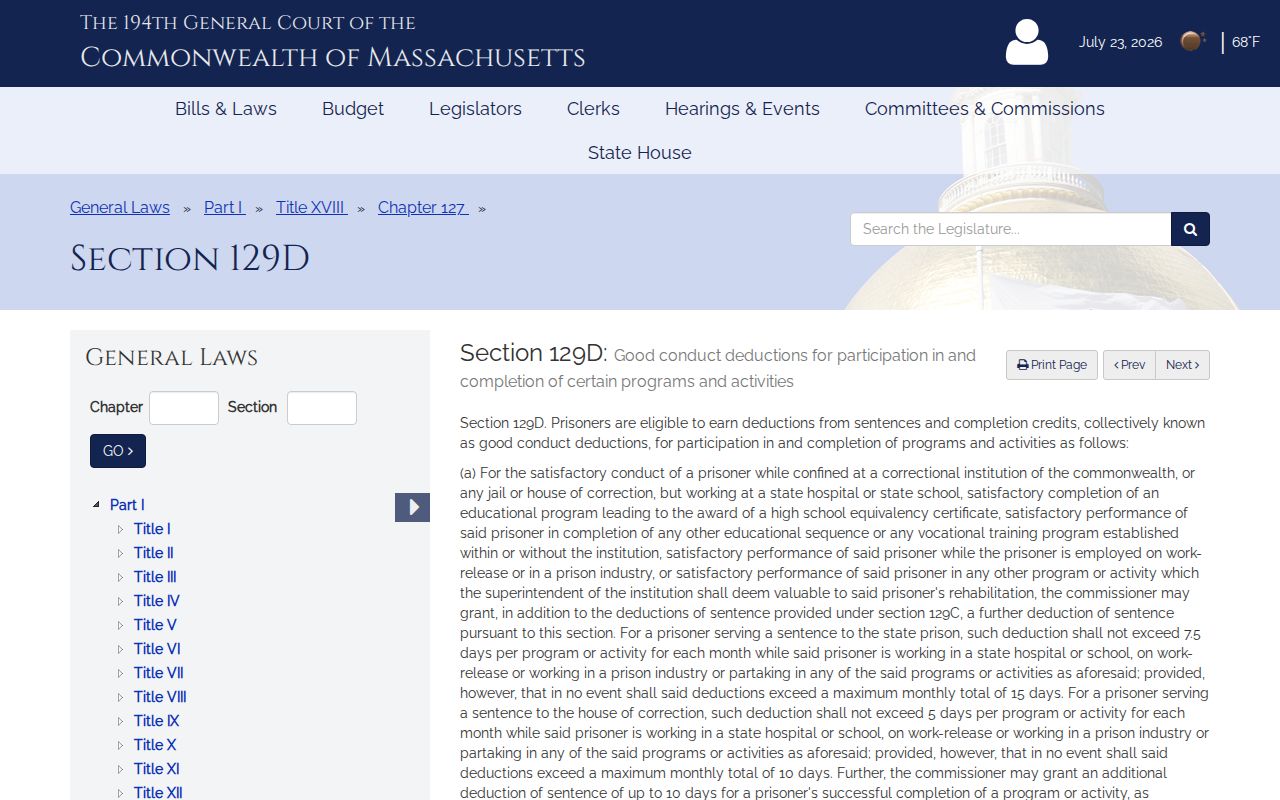
Those credits must be applied to the person's actual sentence structure, so the screenshot supports the rule but cannot reveal any individual's date.
Why Franklin Release Dates Change
MA DOC's Central Date Computation Unit executes sentencing orders, structures sentences, and computes dates in DOC jurisdiction. Under 103 CMR 410.16, a facility begins a Release Order process before the earliest projected general release, then reviews the sentence listing, warrants, discipline, forfeitures, and credits. Staff recheck the mittimus, file, and system immediately before release. That final check explains why an earlier projection can move.
| Factor | Possible effect |
|---|---|
| Earned credit | Eligible, awarded credit can move a projected discharge earlier within legal limits. |
| Credit forfeiture or discipline | Loss or correction of credit can move the calculation later. |
| Warrant, detainer, or hold | The person may leave one sentence or agency but remain confined under another authority. |
| Consecutive sentence | A later term can continue custody after the first term ends. |
| Amended court order | A corrected sentence, credit entry, or legal order can change the calculation. |
| Parole action | Eligibility, grant, rescission, home-plan review, and permit issuance can affect timing without guaranteeing departure. |
The MA DOC sentence-computation regulation shows the Release Order and final verification framework.
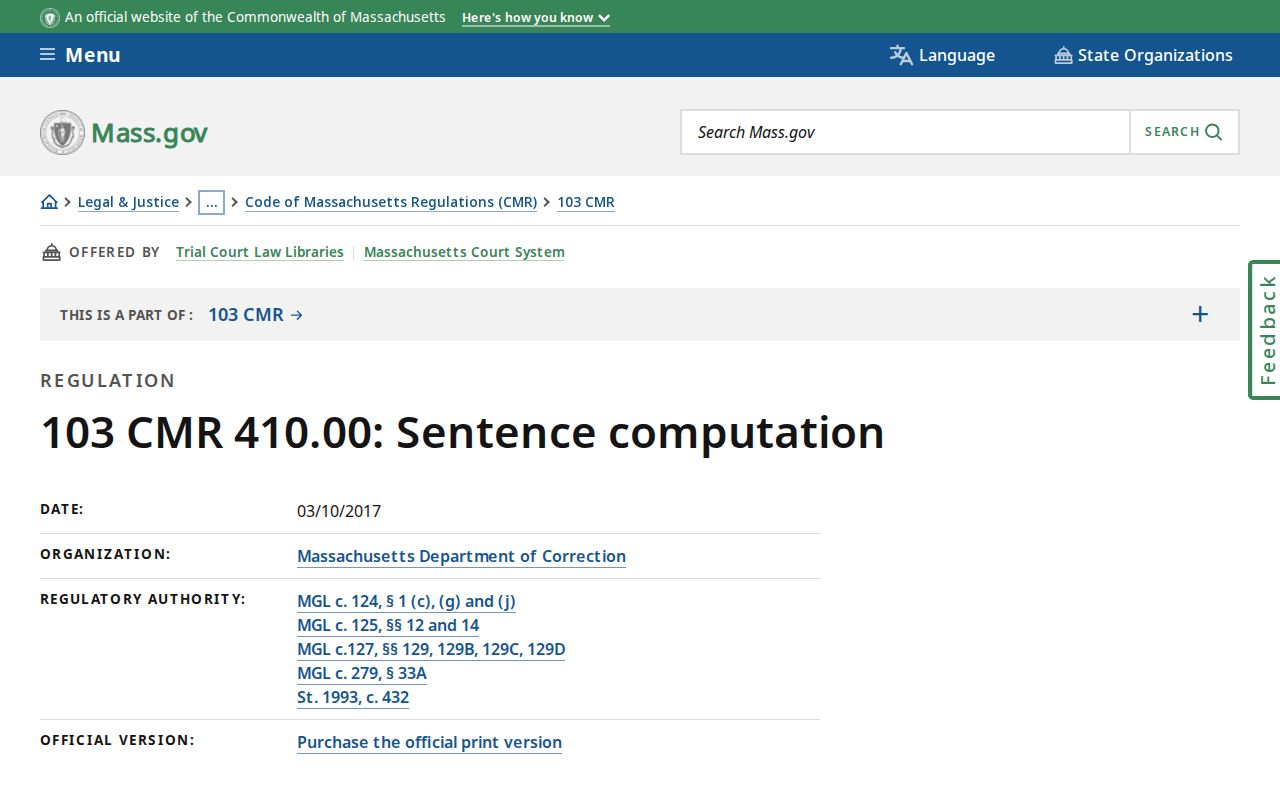
This process is for MA DOC jurisdiction. Franklin County house-of-correction dates are computed by the FCSO records unit under the applicable sentence and credit rules.
Franklin Weekend Release Dates
Massachusetts has two distinct timing rules that must not be combined. M.G.L. c. 127, §150 says a sentence term expiring on Saturday, Sunday, or a legal holiday is discharged on the preceding day. A Franklin sentence-expiration event may therefore appear in Friday's admission and release report. The law does not shift every weekend bail, court release, transfer, or other event to Friday.
An intermittent sentence under M.G.L. c. 279, §6A is different. A court may order a qualifying first-offense jail or house-of-correction term of no more than one year to be served in intervals. The default weekend interval runs from reporting at 6 p.m. Friday to release at 7 a.m. Monday, or Tuesday when Monday is a holiday. Leaving after an interval is not the final discharge of the full sentence.
The official weekend and holiday expiration rule is shown in the assigned Franklin County capture.
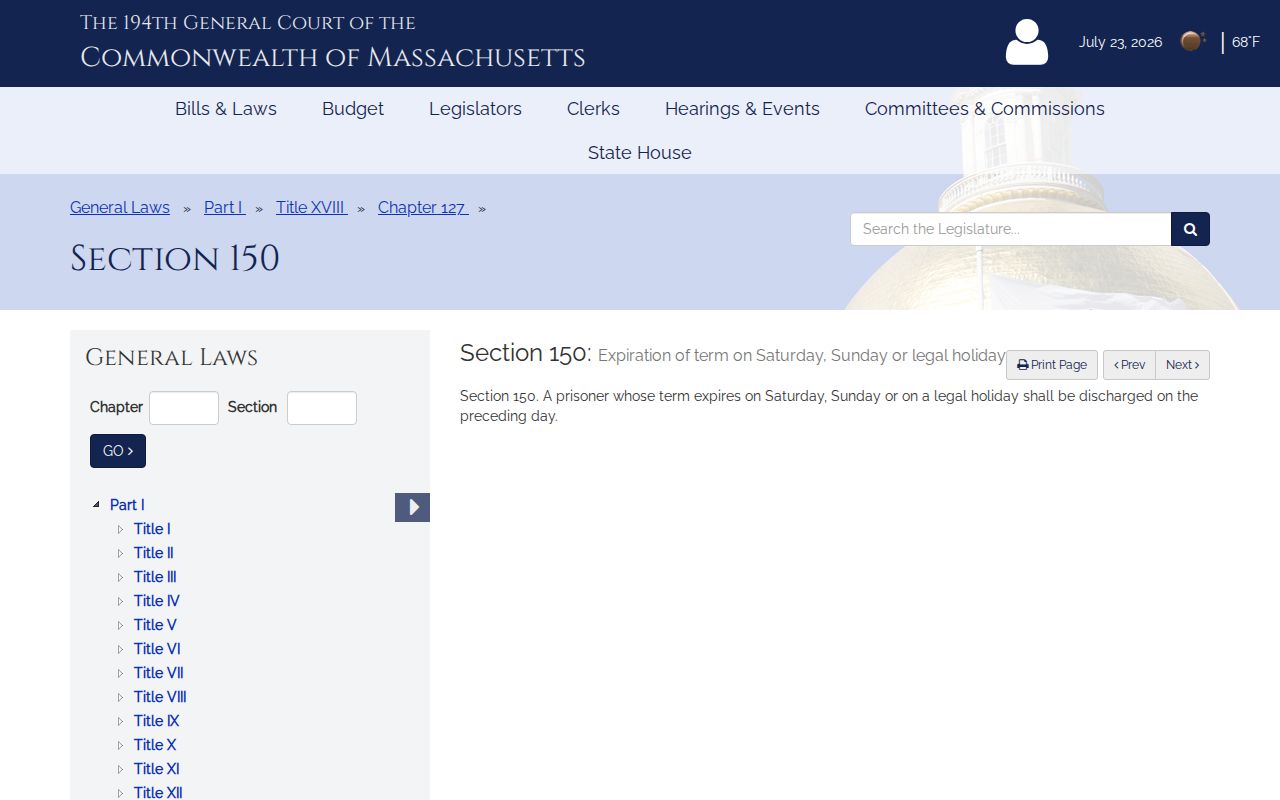
The statutory text supports an earlier sentence-expiration date only in its defined setting, not a broad claim about all weekend releases.
Franklin Parole Release Timing
Parole eligibility is the first date the Board may consider conditional release. It is not the physical release date. For a house-of-correction aggregate sentence of at least 60 days, 120 CMR 200.02 generally sets eligibility at half the aggregate term or two years, whichever is shorter, subject to longer mandatory minimums and other restrictions. State-prison eligibility generally turns on the court-set minimum, applicable credits, and the governing offense and sentence rules.
A hearing may lead to grant or denial. Even a grant can be followed by home-plan review, permit work, new discipline, a warrant, or rescission. The final custody record proves departure. If release is expected from participating MA DOC custody, a Franklin County VINELink check can provide a prospective alert, but the MA DOC transaction remains the formal confirmation.
For an Elm Street sentence, request FCSO's release disposition. If it says parole, the Massachusetts Parole Board record can help establish the supervision path. If it says probation, check the sentencing court and authorized probation record. Neither label should be inferred from the date alone.
Note: A parole grant, projected date, or court order may precede release, so confirm the final transaction and receiving destination with the custodian.